Facilities & Attractions

At a glance
- Rooms: 4 traditional private tatami guest rooms with futon bedding on the floor.
- Privacy: you never share a room with a stranger. Share with your travel companions only if you choose.
- Bathrooms: shared, with plenty for everyone. Two washrooms with 4 toilets and 2 sinks in total, 3 more washing sinks, and one bathing room with a shower and a wood-fired hot tub.
- Heating and cooling: air conditioning and heating in the guest rooms and kitchen only.
- Provided: towels, sheets and blankets.
- WiFi: 24-hour internet on most of the property.
- Laundry: a washing machine is available to guests.
- Grounds: vegetable garden, citrus and persimmon trees, and bamboo forest. The beach is a 5-minute walk.
- Onsen: regular outings to local hot spring baths.
- Language: English is the main language at the retreat. No Japanese is needed.
- Setting: a 100-year-old wooden building. Rustic and simple, not a hotel.
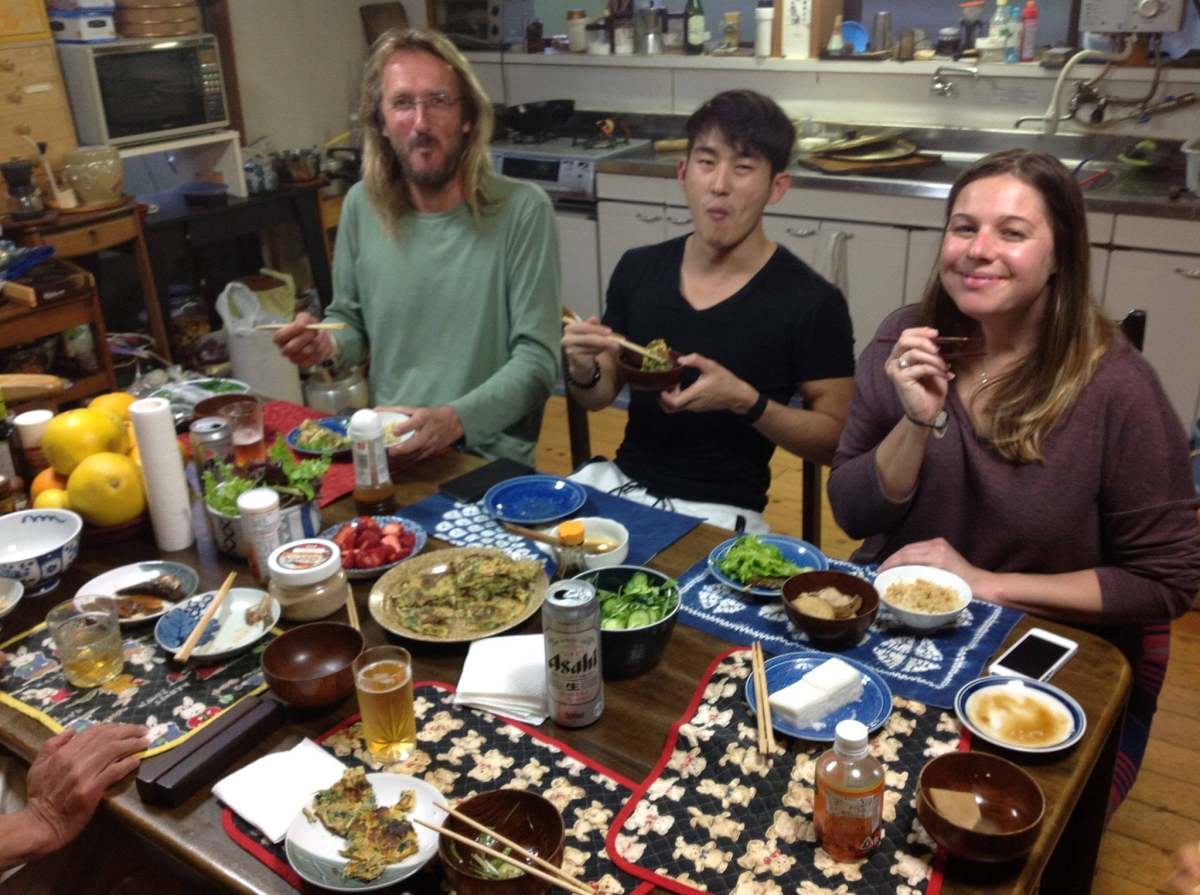
The facilities and general living experience at Shōganji Zen Retreat are best compared, by western standards, to a homestay in a very large well-equipped cottage. There is a quaint and cozy rustic feel and aromas of wood and tatami.
Like the rest of the temple, the facilities are cared for mainly by guests. Please help keep them clean, and leave every space a little cleaner than you found it.

The property features a large vegetable garden, a small orchard with citrus and persimmon trees, all surrounded by lush mountain bamboo forest. Most areas on the property are freely accessible most of the time. You can almost always find quiet and solitude, or pleasant company, somewhere on the property at any given time. The number of guests is intentionally kept small for a more personal and relaxed experience. Typically no more than 4 guests.
For ideas on things to do in the area while staying at Shōganji Zen Retreat, see our Nearby Attractions page.
ROOMS: The property features 4 very traditional spacious private occupancy tatami guest rooms with sliding wooden doors. The rooms may be occupied by single guests, or shared by couples, friends, or families if you choose. Rooms are sparsely decorated and almost unfurnished in the traditional Japanese style, with futon bedding on the floor. Basic furniture items such as tables or chairs may be requested in your room if needed. Note that rooms are not very soundproof and do not lock. However, the retreat is quiet at quiet times, and we have never had any security issues in over 20 years of operation. There is a sense of community and support among guests. If you need something to be stored securely, please ask your host.
The guest rooms have air conditioning for summer and heating for winter, as does the kitchen, which is the main hub of activity. The rest of the building is not heated or air conditioned. Please use the heating and air conditioning only while you are in your room, and turn it off whenever you leave.
There are no private bathroom facilities in any of the rooms.
Keep in mind you are staying in a 100-year-old traditional wooden building on a 600-year-old temple site. It’s not a hotel or a hostel. The building is old and a little run down.


BATHROOMS: All bathroom facilities are shared by guests, and there are plenty of toilets and sinks, so there should never be a shortage. There are two separate washrooms, each with 1 sink and 2 toilet stalls (2 sinks and 4 toilets in total). One of them is easy to miss: it is at the far end of the main hall, then down the hallway. There are also three additional sinks outside the washrooms (not counting the kitchen sink) that you can use freely for washing up or brushing your teeth. There is only one bathing room: a traditional Japanese-style room with a normal hot and cold shower and an old-fashioned wood-fired hot tub. The wood-fired bath is especially delightful in the winter months. The bathing room is quite old and rustic. It’s not fancy, but it’s clean and everything works. The shower system is new, with excellent water pressure and consistent hot water. The bathing room is completely private while you are using it, however, couples or families may choose to bathe together if they wish.


INTERNET: There is 24-hour wifi internet access on most of the property – so feel free to bring your laptop or other device. There are no rules or restrictions regarding wifi use or device use (except during meditation).
LAUNDRY: A washing machine is freely accessible to guests, and laundry is hung to dry. If you prefer a dryer, we can take you to a coin laundry nearby on request.
ONSEN BATHING (off-site): In addition, regular outings are taken to local “onsen”, or traditional Japanese public hot spring baths in the area. The onsen experience is unique to Japan and should not be missed. The best onsen have an outdoor pool usually with a pretty view or garden. Most onsen offer complete standard shower facilities in addition to the hot spring water pools. The rule is that one should bathe completely using the showers, before getting into the shared hot spring pools. Nothing should be taken into the pools, and people typically bathe completely naked. (Most are gender segregated.)


“Taste The Season”
a note on season and climate…
An important part of traditional Japanese culture is to taste the season, or engage with and enjoy the seasons as they are. This is strongly and necessarily reflected in the food, leisure activities, and how one works with nature in preparation for the next season.


Winter: November – March
Why come in winter? Many guests hesitate to come in winter, however, it’s a special time of year with particular benefits and pleasures. Onsen (hot spring) visits and our wood-fired hot-tub are particularly delightful at this time of year. Traditional winter foods in Japan are hot, hearty, and delicious. There are seasonal winter fruits and vegetables – since it does not generally freeze in the region – such as a winter citrus fruit unique to Japan and fresh bamboo shoots in the late winter/early spring.
In practical terms: It’s cold at this time of year and there is no central heating in the temple. (However, it rarely, if ever, goes below freezing.) If you are generally averse to cold weather, do not come at this time of year. The kitchen/dining room tends to be the warmest place in the temple and is the hub of activity at this time of year. The rest of the temple is either not heated or is minimally heated. Guest rooms have their own heating (see above). Bring warm, comfortable, layered clothing for sleep and for morning meditation. Please take note of the temperature chart below.
Summer Heat – July and August
July and August are the hottest months. The weather will begin to cool a bit through September. There is air conditioning in the kitchen and the guest rooms, however you should not expect to stay indoors all day with the air conditioning turned on high. If you come at this time of year, you should have some tolerance to warmer temperatures.


