Explore the Region
Shōganji sits on the Saganoseki peninsula in Oita prefecture, a region with more natural hot springs than anywhere else in Japan. Jiho often takes guests on outings by car, and the local train from Kōzaki station connects you to Oita city, Beppu, Yufuin and Usuki. Here is our guide to the places guests enjoy most.
At a glance
- Oita city: about 25-30 minutes by train from Kōzaki station, or 30 minutes by car.
- Beppu: the onsen capital of Japan, about 40 minutes by train from Kōzaki.
- Yufuin: a quiet mountain town known for onsen and food, about 75 minutes by train from Kōzaki (or Jiho may be willing to drive there).
- Usuki: an old castle town with National Treasure stone Buddhas, a short trip south along the coast.
- Onsen near the retreat: several day-bathing hot springs in Oita city, closer than Beppu or Yufuin.
A short guide to onsen
The term “onsen” simply means “hot spring” in Japanese and always refers to bathing in naturally heated volcanic deep ground water. There are also “sento”, public bath houses where the baths are filled with heated tap water. Onsen are special: the experience and the effects are noticeably different, and the availability of onsen is limited by unique geography offering the special gift of natural hot spring water. By regulation in Japan, a bathing facility can only be called an onsen if its water is over 25℃ and contains a minimum level of naturally occurring minerals.
Much more than a place to get clean, onsen are a quintessential part of Japanese life and culture, and considered an essential part of a good and healthy life in Japan. “Toji” is the practice of treating illness or injury by soaking in an onsen.
Onsen etiquette: wash yourself thoroughly at the showers before entering any hot spring pool. Do not place anything, such as washcloths or soap, in the pools, and swimsuits are not permitted. Most onsen are separated by gender. Bring a large towel to dry off with and a small one to wash with. More detail is on our Orientation page.
Tattoos: there is a taboo around tattoos in Japanese onsen culture that stems from a historical association between tattoos and criminal groups, most notably the Yakuza. Many onsen still turn away tattooed visitors, Japanese or otherwise. Fortunately, more and more onsen are taking a more inclusive approach, and some advertise themselves as “tattoo-friendly”. The situation is changing for the better, especially in Oita prefecture. Our recommendations below show the tattoo policy where we know it, and these lists can help: The Onsen Magazine: tattoo-friendly onsen and tattoo-friendly.jp.
Beppu: onsen capital of Japan
The city of Beppu is heavily featured in tourist guides and is about 40 minutes by train from Kōzaki station. There is just about everything a visitor might want to relax and have a good time in a quintessentially Japanese fashion. The major attraction is the extremely high concentration of onsen, with around 180 individual facilities ranging from the ultra luxurious to free outdoor public baths. Cost, degree of luxury, style and amenities vary dramatically from place to place, and many are attached to ryokans (traditional Japanese inns) or hotels. There is also excellent shopping, daytime walking and nightlife in Beppu, all in a distinctly Japanese style.
Beppu has 8 main onsen districts, known as “Beppu Hatto”, each fed by a different deep underground spring: Beppu, Kannawa, Kankaiji, Myoban, Kamegawa, Shibaseki, Horita and Hamawaki. The mineral content and water quality in each area is noticeably different, and locals usually have their own favourite. Beppu also offers mud baths, sand baths and steam baths, and the “Hells of Beppu”, spectacular hot springs for viewing rather than bathing. Other key attractions near Beppu are the Monkey Mountain (Takasakiyama) and the aquarium.
More about Beppu: Japan Guide: Beppu and Lonely Planet: Beppu.
Recommended onsen in Beppu
Ebisuya (Yuya Ebisu)
- Tattoos: allowed
- Towels: bring your own or buy one on site
- Shampoo and body soap: provided
- Price: about ¥1,200
- Features: a large complex with indoor and outdoor baths, a cedar wood bath, a cave bath, a tourmaline crystal bath with a view, saunas, cold plunge baths, massage, a coffee shop, a lounge and a meditation room
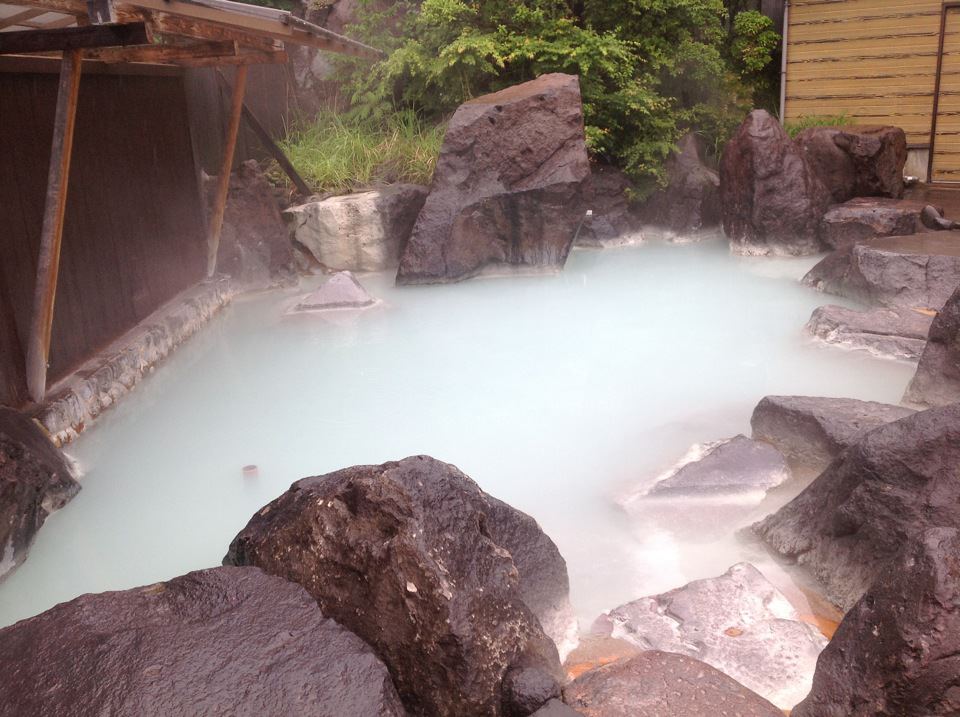
Ebisuya is perhaps our favourite onsen in Beppu. It is in the well known Myoban area, up in the mountains on the outskirts of the city, about 30 minutes by bus or 10 minutes by taxi from Beppu station. Tourist and bus information is available in English at the station. It is a large, clean and very well equipped onsen and spa that is friendly to foreigners and allows those with tattoos to use the facilities freely. Its natural volcanic spring water has a unique blue-white hue special to the Myoban district, and it is in a stunning location overlooking Beppu. There are 2 floors of bathing facilities, quite different from each other, and men and women alternate floors daily. For private onsen bathing (a small bath and private room for families or couples) or overnight stays, there is another entrance and reception a five-minute walk down the road.
Kiyosen
- Tattoos: allowed
- Towels, shampoo and soap: bring your own
- Price: about ¥220
- Two indoor baths (hot and warm)
A very inexpensive, no-frills “local” onsen, usually with plenty of regulars at any time of day. A great place to experience simple, everyday onsen culture. The building is new, but the onsen and its water source go back hundreds of years.
Shibaseki Onsen
- Tattoos: allowed
- Towels, shampoo and soap: bring your own
- Price: about ¥220
- Two indoor baths (hot and warm), one outdoor bath and a sauna
A Beppu municipal hot spring, popular with locals.
Umezono
- Tattoos: allowed
- Towels, shampoo and soap: bring your own
- Price: about ¥300
A small, newer local hot spring with few people. For those who want to enjoy a real local bath.
Onishi no Yu
- Tattoos: not allowed
- Towels: bring your own
- Shampoo and body soap: provided
- Price: about ¥620
- One indoor and two outdoor baths
Spacious, clean and comfortable indoor and outdoor baths, usually quiet and relaxing.
Mikaeri Onsen
- Tattoos: not allowed
- Towels: bring your own
- Shampoo and body soap: very basic, provided
- Price: about ¥300
- One indoor bath, one outdoor bath, an onsen sauna and a cold bath
A family-run hot spring with very strong water. The building is old, but the hot spring is very good, and you can try dishes steamed in the hot spring steam.
Beppu Suginoi Hotel
- Tattoos: not allowed
- Towels, shampoo and soap: provided
- Price: about ¥1,800 (may vary)
- One indoor bath, one very large outdoor bath and a sauna
A very large bath with a fine view, in a famous hotel. It can be crowded.
Housensou
- Tattoos: not allowed
- Towels: bring your own
- Shampoo and body soap: provided
- Price: about ¥500
- One indoor bath and a sauna, in a hotel
Bokai
- Tattoos: not allowed
- Towels: bring your own or buy one on site
- Shampoo and body soap: provided
- Price: about ¥500
- One outdoor bath on the hotel roof
Yufuin: a mountain town for onsen and food
My personal favourite, particularly for higher quality onsen and fantastic food. Yufuin is about 75 minutes by train from Kōzaki, or Jiho may be willing to drive there. If you want a beautiful, quiet little town among the mountains, with great food, shopping and a fantastic selection of onsen and ryokans, Yufuin is the place. The town centre is designed for walking, with many car-free streets, smaller traditional Japanese buildings and lovely gardens. It is pleasant to walk outside the town up on the less populated mountainsides, with great views and more secluded onsen, ryokans and eateries. For the energetic, Mount Yufu makes a challenging climb.
The food in Yufuin really stands out: all kinds of speciality food vendors and restaurants offer traditional Japanese delicacies, some made the same way for hundreds of years. There is also a wonderful selection of take-home treats and local crafts: regional speciality foods, condiments, sweets, spices and drinks, as well as fine antique and speciality craft shops in and around the town.
Recommended onsen in Yufuin
Tsukanoma
- Tattoos: allowed
- One large outdoor pool in a forest setting, with separate facilities for men and women
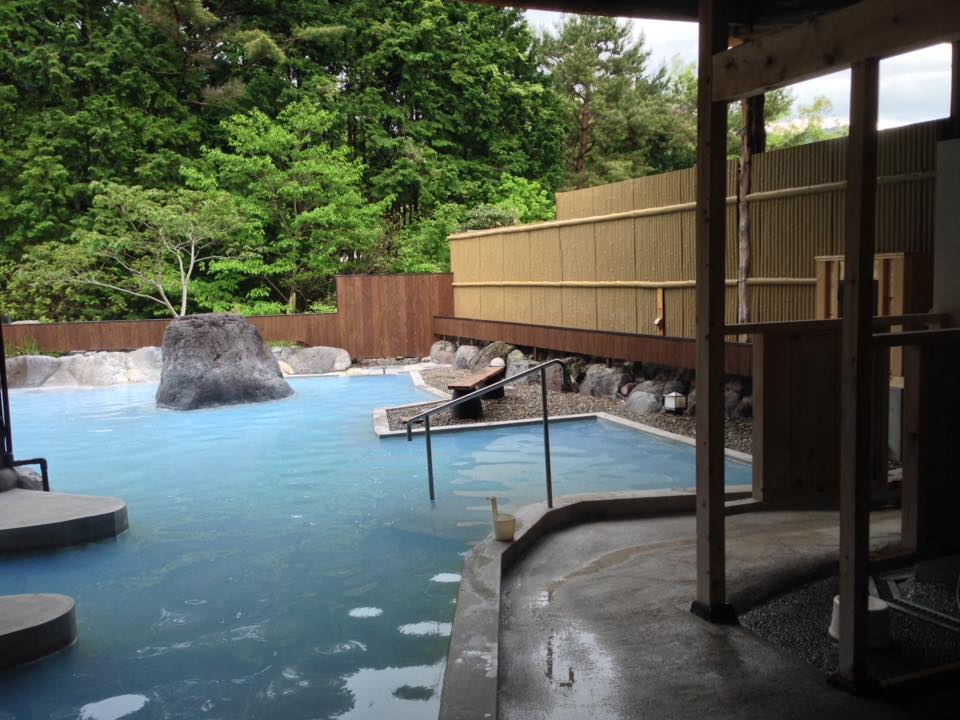
Tsukanoma is my favourite onsen in Yufuin, up in the mountains on the outskirts of town, about a 30-minute walk or 10 minutes by taxi from Yufuin station. Information is available in English at the station. It is a large, clean and beautiful outdoor onsen with exceptional water quality, friendly to foreigners, and it allows those with tattoos to use the facilities freely. Its natural volcanic spring water has a unique bluish hue. Tsukanoma is a simple and straightforward onsen experience, but carefully crafted and managed to offer what I consider a perfect hot spring bath. Worth the effort to get there! You can also stay overnight, and there is a Japanese fine dining restaurant on site, though both are fairly high cost.
Onsen closer to the retreat
Oita city itself has many day-bathing hot springs, closer than Beppu or Yufuin and easy to combine with a shopping trip. A few that are well rated in local listings are below. We have not yet confirmed their tattoo policies, so please ask Jiho or check before you go.
Kanzaki Onsen Tenkai no Yu
- Price: about ¥600
- Open daily, 8:00 to 1:00 (last entry midnight)
- Indoor and outdoor baths for men and women, plus private family baths
Free-flowing natural spring water (gensen kake-nagashi) and views over Beppu Bay, in the Kanzaki area of Oita city.
Akeno Asahi Onsen
- Price: about ¥380
- Several baths, open 24 hours at weekends
An unusual “moor” spring, with water coloured by ancient plant matter deep underground.
Kanaike Onsen
- Price: about ¥350
A simple onsen with cloudy, pale yellow water, a short walk from JR Oita station. Handy before or after a train journey or a shopping trip in the city.
Usuki: castle town and stone Buddhas
Usuki is an old castle town a short trip south of the retreat along the coast, on the same JR Nippō line as Kōzaki station. It makes a rewarding half-day or day trip.
- Usuki Stone Buddhas (Usuki Sekibutsu): more than 60 Buddha figures carved into a cliff of soft volcanic rock, believed to date from the Heian and Kamakura periods (roughly 800 to 900 years ago). In 1995 they became the first rock-carved Buddhas in Japan to be designated a National Treasure. Open daily 9:00 to 17:00 (last entry 16:30); admission ¥550. About 20 minutes by bus or 15 minutes by taxi from Usuki station; buses are infrequent, so check the timetable.
- Nioza Historical Road: a 200-metre stone-paved lane lined with temples and Edo-period houses, about 10-15 minutes on foot from Usuki or Kami-Usuki station. Free to wander.
- Samurai district and castle ruins: the old castle site is now a park with a surviving turret and gate. Nearby are the Inaba and Marumo samurai residences and Ryugenji temple with its three-storey pagoda.
- Food: Usuki has a fermentation tradition of over 400 years and is known for its miso and soy sauce. The Hacchō-ōji shopping street is a good place to browse local specialities.
- Usuki Takeyoi: in the first week of November, thousands of bamboo lanterns light up the narrow streets of the old town. A magical time to visit.
- Getting there: about 38 minutes by limited express from Oita station, or a local train south from Kōzaki. Free bicycles can be borrowed at Usuki station.
More about Usuki: Japan Guide: Usuki and Usuki Stone Buddhas (official site).
For walks, shops and sights within a few minutes of the retreat, see Things to Do Nearby. Prices and opening hours change, so please check before you travel. Jiho is always happy to suggest outings, and day trips by car with him are common.


You must be logged in to post a comment.