Daily Schedule

At a glance
- Meditation: 60 minutes of zazen every morning at 6:00, strongly encouraged for all guests.
- All levels welcome: from absolute beginners to very advanced practitioners. Relaxed, not overly formal or strict.
- Language: all activities with guests are in English. No Japanese is needed.
- Mornings: no breakfast is encouraged (tea and coffee are fine), followed by temple work, gardening, and then preparing lunch. Lunch is the first meal of the day.
- Afternoons: free and flexible. Outings with Jiho, onsen, hiking, the beach, or quiet time.
- Meals: lunch and dinner, prepared together. Most dietary needs can be accommodated.
DAILY SCHEDULE Quick Reference:
5:30 – Wake up & chanting in main hall.
6:00 – “Zazen” meditation in main hall, 60 minutes.
7:00 – Tea time and/or personal time. No breakfast is strongly encouraged. See details below…
8:00 – “Samu” or service to the temple. Help out around the retreat, learn something new.
11:00 – Lunch preparation.
11:30 – Lunch time.
12:30 – Activities and outings of your choice.
17:00 – Dinner preparation.
17:30 – Dinner time.
18:30 – Evenings are flexible, relaxed and social.
21:00 – Quiet time.
See also DAILY SCHEDULE In Detail below…
Morning meditation is strongly encouraged for all guests. This follows the basic principle behind the existence of Zen Retreat and also fosters a sense of community and shared experience among guests. Beginners and experienced meditators are all welcome, and while traditional Zen sitting-meditation form is encouraged, it is not required. Meditation is truly for everyone, and we follow a “just try it” philosophy here at Shōganji.
The following links will help you understand how to practice Zazen (Zen meditation).
A superb, detailed guide to zazen can be found here in English, and here in Japanese. Keep in mind that we are not so strict, but these videos will guide you in the right direction regardless of your level of experience. Just do your best.

All are welcome. Your experience here can be as strict or as relaxed as you like depending on your needs and interests. Some guests simply want to try meditation and take some time to rejuvenate and experience the magic of Japan in a unique setting. Others may wish to delve deeper into Zen tradition and possibly even add some monastic elements to their stay. (Koan, fasting, extended meditations, calligraphy, Zen studies, and more…)
Meals are informal, communal, and your contribution to menu design and food preparation are always welcome. Please be sure to inform us of any special dietary requirements or preferences you have – most can be accommodated.
No breakfast rule – and the benefits of Intermittent Fasting. No breakfast is strongly encouraged based on the NISHI HEALTH SYSTEM and other evidence. This is called Intermittent fasting – what you achieve by skipping breakfast and maintaining a 6-8 hour active eating window in a 24 hour cycle – and is backed by abundant scientific evidence. Please give it a try!
Tea/coffee/herbal tea is permitted.
Alternatively, a light breakfast such as dried fruit, nuts, or an energy bar, is an option for those who cannot function properly or cannot fast for medical reasons. Important! If you do choose to eat something in the morning, please be discreet since the other guests are trying to fast! Please don’t prepare breakfast in the kitchen or eat in front of the other guests. If you do eat something, please do it privately.
DAILY SCHEDULE In Detail:
5:30 – Wake up and freshen up in preparation for 6:00 meditation. 30 minutes of chanting by Jiho in the main hall as guests arrive for meditation. We strongly recommend avoiding any strong caffeinated beverages or any food whatsoever until after meditation. We suggest weak tea or water only.
5:55 – Prepare and settle in for meditation. Have your cushions and other props ready for 6:00 sharp.
6:00 – Zazen, silent sitting meditation 60 minutes, strongly encouraged for all guests. Proper zazen sitting form is encouraged but not required. We are flexible and accommodating for everyone, but please just try your best. We welcome all levels of ability and experience. For some the challenge may be to just try informal meditation for a short time each day, for others it may be to develop strict form and extend one’s endurance. For those unable to use traditional cross-legged sitting form, we have numerous cushion options, stools, chairs, and a couch available to you.
Our 60 minute Zazen meditation sequence is as follows:
– 30 minutes of meditation.
– 5 minute optional silent break signaled by bell.
Use this time to stretch, reposition, or use the bathroom.
– 25 minutes additional meditation. If leaving during the break, please don’t be late returning.
7:00 – Tea time, social time in the kitchen, and/or personal time. No breakfast is strongly encouraged; see the No breakfast rule above for the reasons and the light-breakfast option. Tea, coffee and herbal tea are fine.
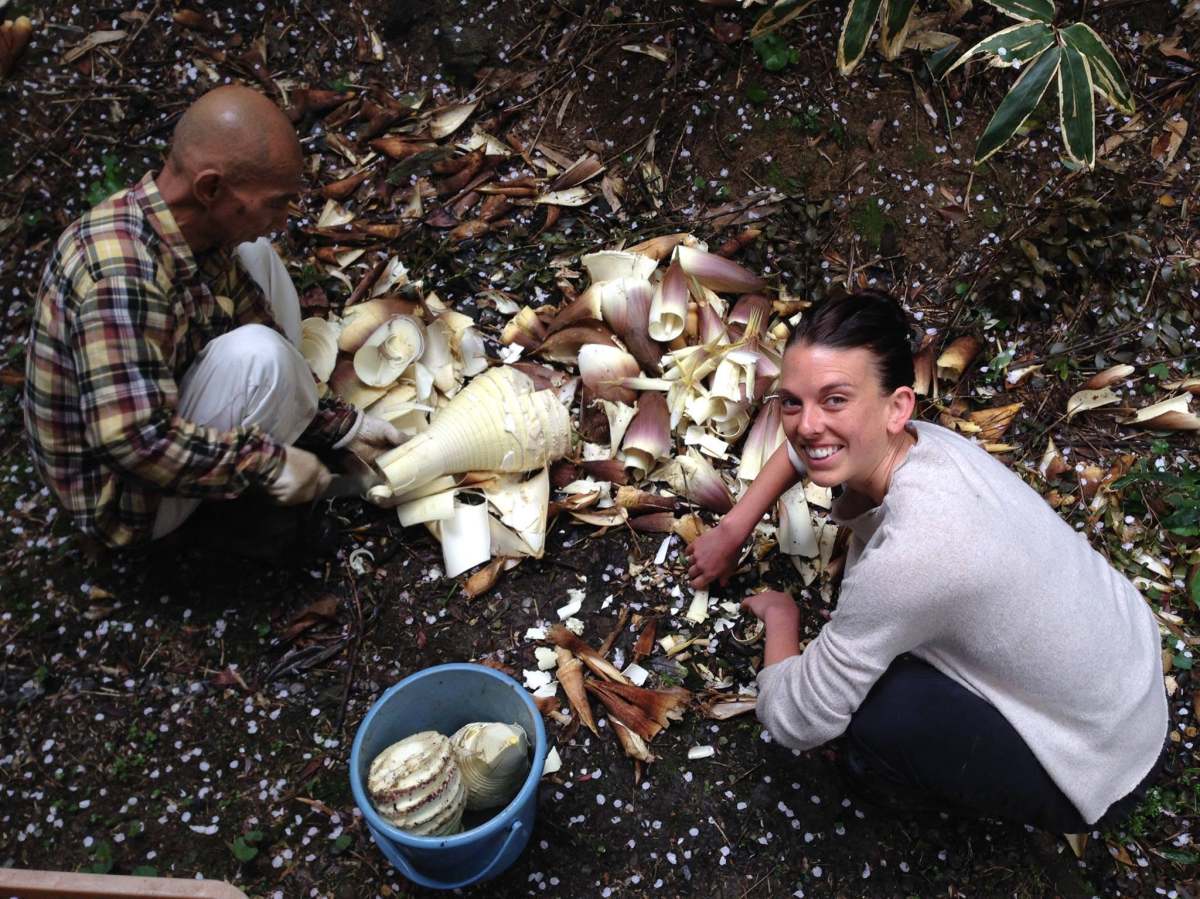
8:00 – “Samu” or service to the temple. We appreciate your assistance in caring for and maintaining this 600 year old sacred site. Help out in our large vegetable garden, or wild-harvest special seasonal foods from around the property such as mushrooms, ginkgo nuts, or bamboo shoots; help out with temple and property maintenance, learn traditional food preparation, etc.
Traditionally “Samu” is slow, quiet, meditative “help around the temple” and typically is part of monastic life in Japan. At Shoganji “Samu” is often social and learning oriented, but can be more traditional, meditative, and solitary if you prefer. Just ask. We suggest at least one hour of samu each morning.
11:00 – Lunch preparation. Get cleaned up for lunch and/or help us prepare lunch.
11:30 – Lunch time. Your participation is encouraged and appreciated. Learn some Japanese cooking tips or pick some fresh items from the garden. And, please, help out with the dishes at the end of the meal!


12:30 – Afternoons are flexible and unscheduled but may include independent activities, activities with your host, or activities organized between yourself and other guests: sightseeing, shopping, walks, runs, yoga, swimming, other exercise, Tai Chi, trips into nearby towns, visits to area onsen (hot-spring bathing), additional meditation/Zen teaching, and more. Jiho is a very engaged host, open to suggestions, and wants you to get the most out of your time here. There is no formal yoga class at the retreat, but yoga is welcome as a personal practice during free time, and the main hall is a good place for it. Excursions by car with Jiho are common. Alternatively, you can explore independently or organize something with the other guests.
17:00 – Dinner preparation.
17:30 – Dinner time. Once again, your participation is encouraged and appreciated.
18:30 – Evenings are flexible, relaxed and social. Many guests may also take this time to read, do an additional evening meditation, bathe, or any other activity of your choice.
21:00 – Quiet time. Turn off bright lights. Unless there’s a party. Yes, that happens sometimes!
Special Activities:
- On request, at additional cost, off-site overnight stays can be arranged in places of special interest such as Ryokan visits.


